Cover the board. Bill from the ticket. Know who pays.
RockOn runs the dispatch board, captures the scale ticket, and bills the customer, the producer and the hauler from the same verified ton. Every invoice you send adds to a payment record. Next time, you know who pays before you haul.
The daily work, on one board. The payment record is what it leaves behind.
Dispatch
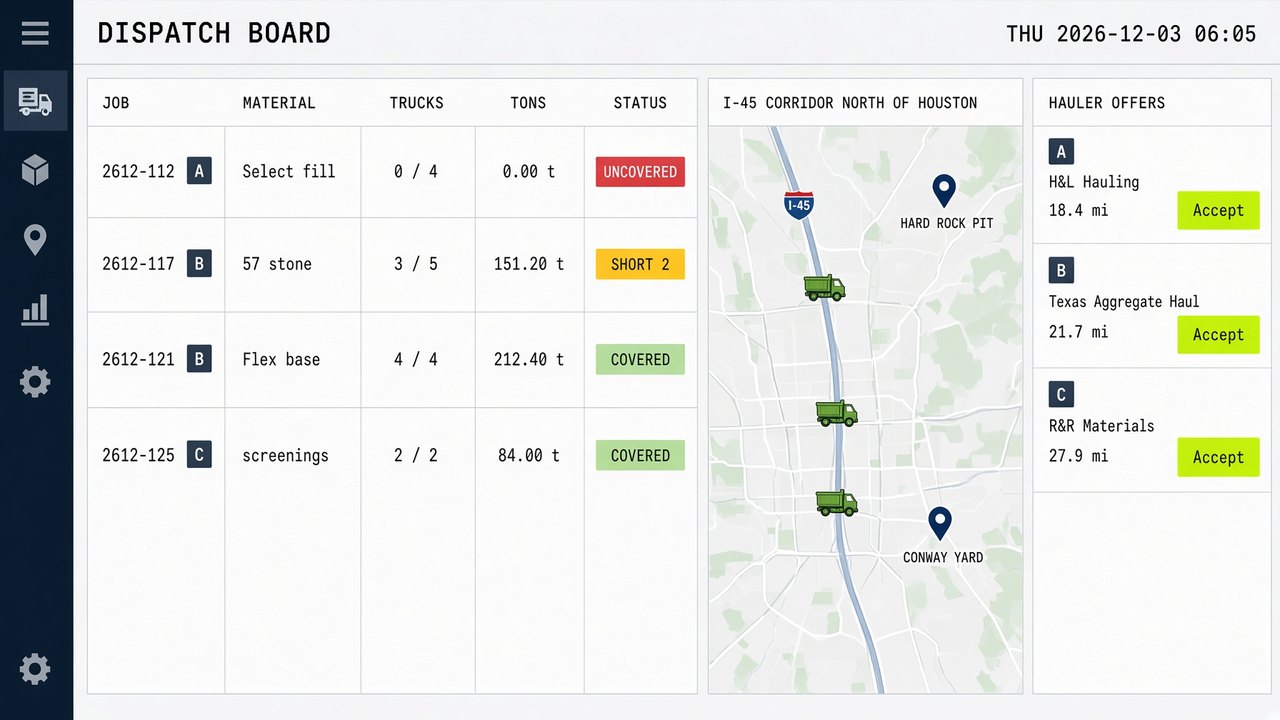
Cover tomorrow's board tonight. Haulers accept from their phone.
See dispatch →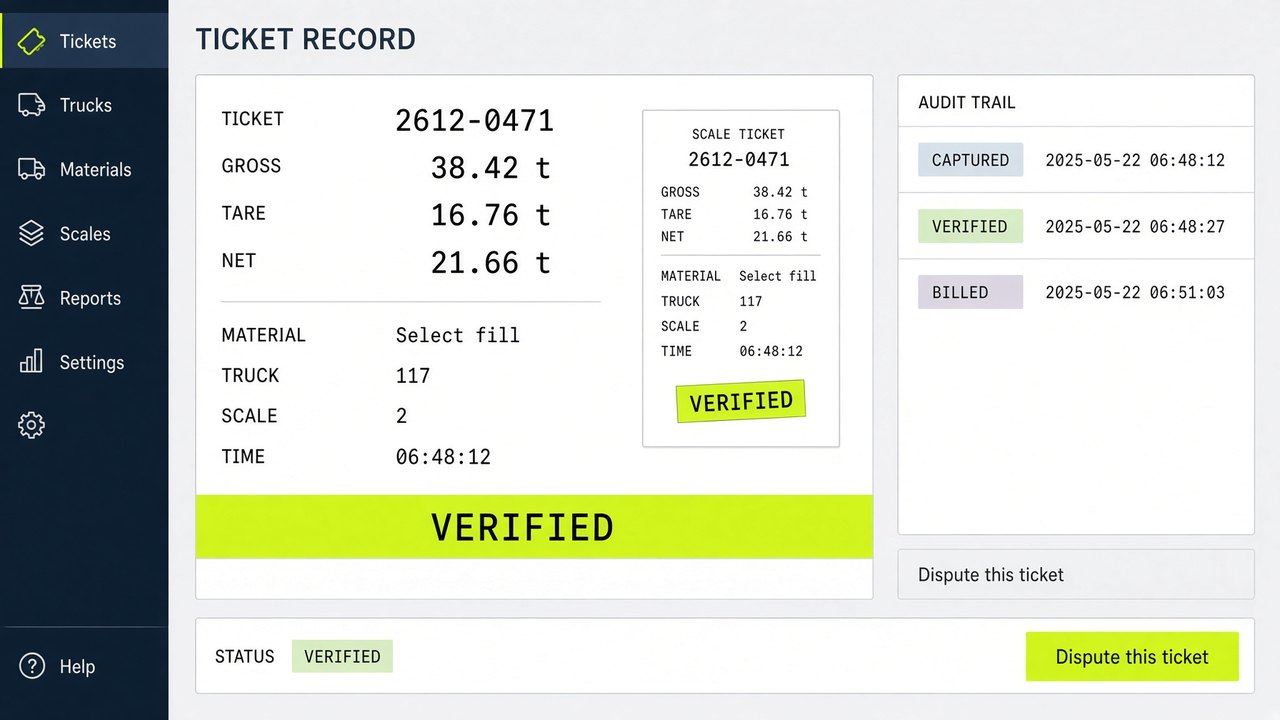
Tickets
Gross, tare, net. Verified before it bills.
See tickets →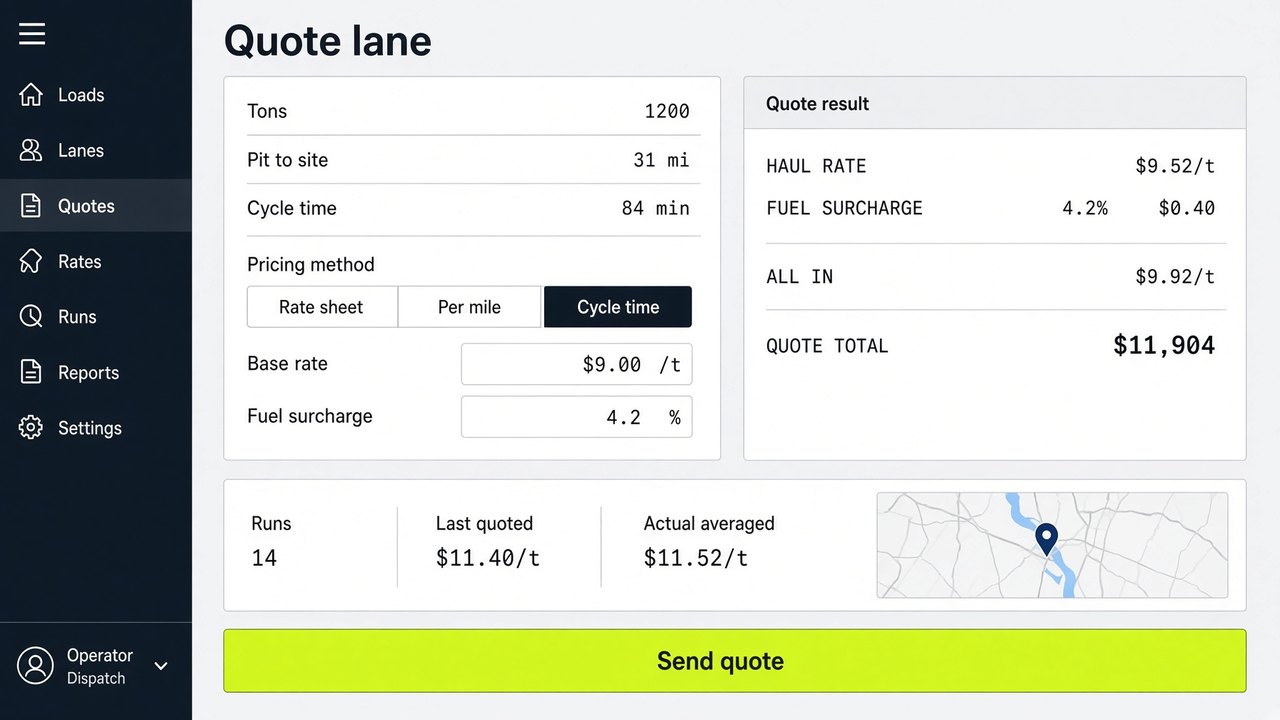
Quotes
Price a lane three ways and see what it really cost.
See quotes →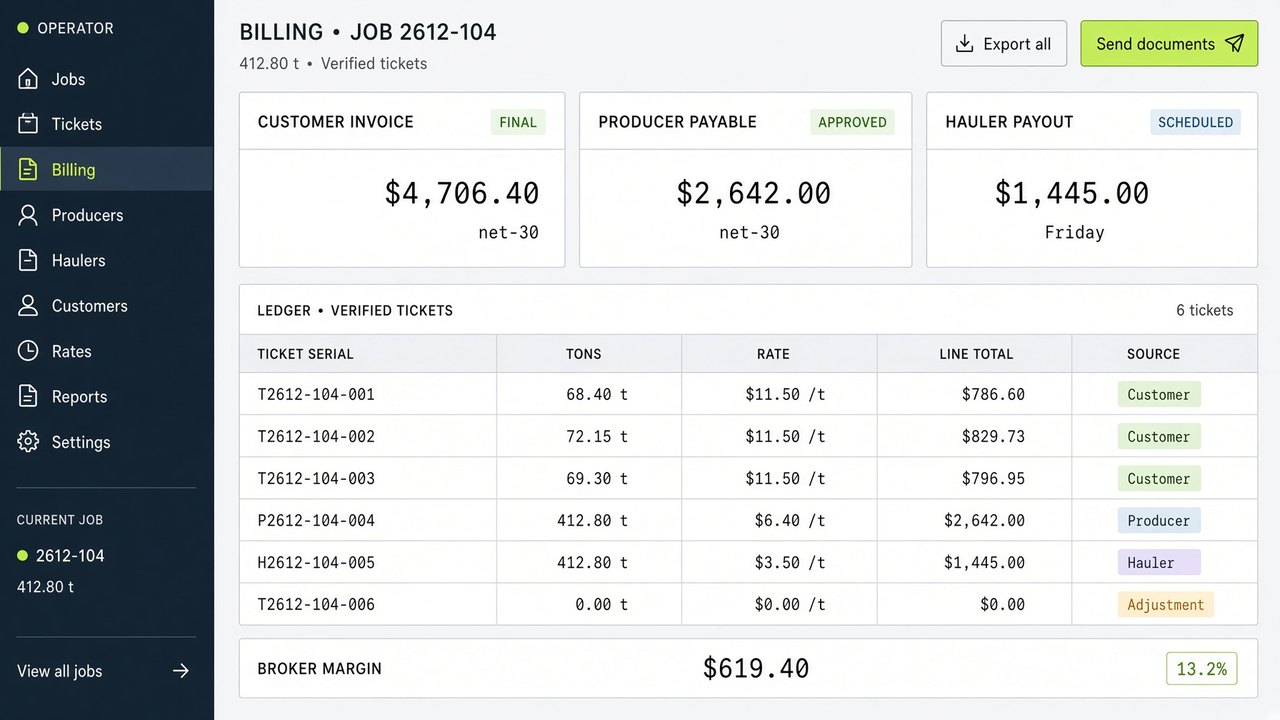
Billing
Customer, producer and hauler paid from the same ton.
See billing →Slow pay is the biggest line item nobody budgets.
Every broker in the trade knows the customer who pays at 47 days. The problem is that nothing you run today remembers it. The board forgets the load the day it is billed, and the next job starts from zero. The contractor's 47 days is your 47 days, and your hauler still gets paid Friday.

Rabbet surveyed general contractors and subcontractors. Figures as reported by Rabbet. Read the report →
Watch one load become a record.
An uncovered job at 6:05 a.m. A truck on the scale at 6:48. Three invoices from one job. A payment on day 29. One line in the record, added and never edited.
Quote it, cover it, haul it, ticket it, bill it, get paid. RockOn writes the seventh step.
See the four jobs →Standing you can set terms by.
Every ticket, invoice, payment, dispute and void is a line in one record. A correction is a new line. The first line stays. A company's standing, A to D, is built from how it has paid, not from what it says about itself. Move the numbers and watch the letter move with the days.
Every standing traces back to ticket and invoice lines that both sides can read. How the record is kept →
What changes on day one.
Tomorrow's board, covered tonight
Uncovered jobs surface first. Staged haulers send offers, closest first. Accept, and the day sheet updates.
No ticket keyed twice
The driver captures the ticket at the scale house once. Billing, hauler pay and the record all read the same verified line.
Three documents that agree to the ton
Customer invoice, producer payable and hauler pay from one job, from the same tickets, the same day.
Standing before you quote
Every invoice adds to the company's payment record. Standing is one input when you set terms. The decision is yours.
Every party to a haul gets its own payment record.
Brokers
Cover the board, bill three ways, and keep the payment record that protects your margin.
For brokers →Producers
Know how a customer pays before the first truck crosses the scale.
For producers →Haulers
Paid from verified tickets. Known for every load you show up for.
For haulers →Customers
One ticket, one invoice, one record you can read yourself.
For customers →Run your own numbers.
Loads a month, what a load bills, how long customers take to pay. The calculator shows what is sitting in receivables and what carrying it costs a year. Your numbers are not sent to RockOn and are not stored.
EXAMPLE · 800 LOADS A MONTH · $620 A LOAD · PAID AT 47 DAYS · 9% COST OF MONEY
One platform fee. No per ticket fees. Nothing charged to your customers.
Drivers and scale operators are never a seat you pay for. Plan on two weeks from the kickoff call to running the board.
One report per company. Every line tied to a ticket and an invoice.
Know who pays before you haul.
What is slow pay costing you?
Three numbers you already know. The result is what sits in receivables and what it costs to carry it. Your numbers stay on this page.
How it is figured
Receivables = monthly billing × days to pay ÷ 30. The late part is the share beyond your terms. Carrying cost = late part × your rate. RockOn does not promise a shorter days to pay. Verified tickets remove the dispute delay, and the payment record lets you set terms by standing.
Four jobs, one system.
Dispatch, tickets, quotes, and billing are the daily work. The payment record is what the daily work leaves behind.
Dispatch
Jobs, trucks and hauler availability on one board. Live map of your trucks.
Tickets
Gross, tare, net. Every ticket lands in one verified record.
Quotes
Rate sheet, per mile, or cycle time. Fuel surcharge built in. Quoted vs. actual on every lane.
Billing
Three way billing from the verified record, not posted tonnage.
Every line traces to a ticket.
A company's standing is only as good as the history behind it. Every invoice you bill adds to it.
RockOn sets a standing, A to D, for every company billed through it, from the lines in its own record. The company being described does not write its own record. Invoices and payment dates are entered by the company that billed the job. The billed company sees every line and can dispute any of them.
What goes in
- Billed invoices on real net 30 dates
- Payments
- Disputes, which pause the invoice until resolved
- Voids, which reverse the original
- Prepayments, settled at issue
- A Short history label under 12 counted invoices, instead of a letter
What does not go in
- Self reported data
- Opinions
- Anything not billed
Two standings, one record.

Customer standing
Do they pay? Built from invoices, payments, disputes, and voids.
Hauler standing
Did the company show, on time, with clean tickets? Built from loads hauled, on time arrival, tickets that matched the scale, and how disputes ended. Standing describes the company, not the driver.
Same record, same rules. Verified means the weights matched the scale house ticket. If a weight is corrected later, the correction is a new line and the first line stays, so both sides see what changed. Driver records are used only inside the platform and are never sold.
Watch the standing.
What a report holds.
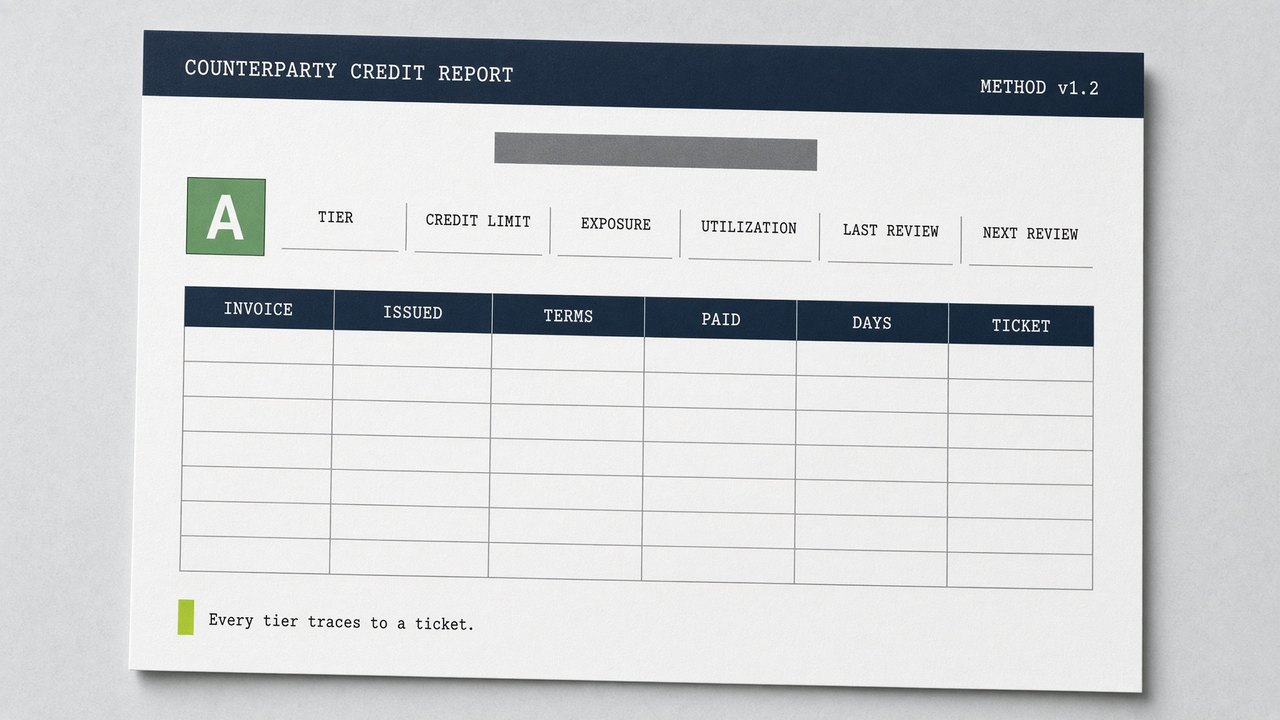
A performance report is one company's payment record on one page. Standing A to D, invoices billed, paid on terms, average days to pay and open disputes, with the invoice table behind every number. It reports on companies, not people.
Name the companies you bill. We tell you what the record holds.
Up to five companies, not people. A company you name is told in writing that a report exists on it, how to read it, and how to dispute any line, whether or not it uses RockOn. If the history is short, the report says so. We do not guess.
Naming a company tells us you bill them. We tell that company a report exists on it. We do not tell it who asked.
Method version 1.2. Every change is dated on the method page. Read the method →
Book a 12 minute walkthrough.
A live screen share on your own lanes. The board, a ticket, a quote, a bill, and the payment record behind them. No slides. Bring a week of tickets if you want to see what they would have built.
No per ticket fees. No fees to your customers.
A monthly platform fee with a block of loads included, then a per load rate. Drivers and scale operators are never a seat you pay for. Request pricing for your volume and a person replies within one business day.
Brokers and producers
A monthly platform fee with a block of loads included, then a per load rate.
Fleets
Fleets running their own board: a base fee plus a fee per active truck. Haulers taking offers on a broker's board pay nothing.
Trust layer
Performance reports and standing on the companies you bill. Your own payment record is in every plan. RockOn reports what the record holds. It does not vouch for any company.
What every plan includes
- Dispatch board, live map, and hauler offers
- Scale tickets, e-tickets and the verified record
- Quotes, three pricing methods, fuel surcharge
- Three way billing from the verified record
- Your own payment record, exportable any time
- No charge per ticket, per user, or to your customers
How it compares
| Paper and phone | Your current stack (board, spreadsheet, QuickBooks) | RockOn | |
|---|---|---|---|
| Dispatch | Calls and texts | Board | Board and hauler offers |
| Tickets | Paper, keyed later | Photo or e-ticket | Verified record with a ticket number |
| Billing | From posted tonnage | From tickets | From verified tickets, three ways |
| Who pays on time | Memory | Aging, by invoice, in one book | A payment record on every company you bill, across jobs |
| Fees | Staff hours | Subscriptions plus the hours keying tickets twice | Platform fee. No per ticket fee, nothing to your customers |
Plan on two weeks from kickoff to running the board.
A 30 minute kickoff call. We load your rate sheets and customers. Your haulers get the driver app. No setup fee. Request pricing for your volume below, or book a walkthrough first.
Built by people who carried the receivable.
The people behind RockOn brokered aggregates for years, carrying the receivable while producers and haulers waited on it. Customers paid late, and nothing on the desk kept the history from one job to the next. A late payer on one job showed up clean on the next.
The dispatch products we ran kept the board and forgot the load. Once a job was billed, the record of how it got paid was gone.
So they built the system they wanted to run. The board keeps the load after it is billed. Tickets are verified before they bill. The payment record follows a company from job to job. That system is RockOn.
The payment record is what the daily work leaves behind. Every invoice billed through RockOn adds to it, and a performance report reads it out, one company at a time.
Bring a week of tickets. We will show you the record they would have built.
Book a 12 minute walkthroughRockOn · Conroe, Texas · service@gorockon.com
How standing is set.
Plain language. Every change is dated and listed here.
Where it comes from
RockOn builds every standing from the same record it uses for billing. A ticket is weighed and verified. An invoice is billed from it on a real net 30 date. RockOn writes each payment, dispute, void or prepayment as a new line. It adds lines and never edits them. A correction is a new line and the original stays visible. Where the law requires a change, RockOn makes it and notes it on the record.
How standing is set
- Paid on terms counts for the company. Paid past the invoice terms counts against it, more the later it is.
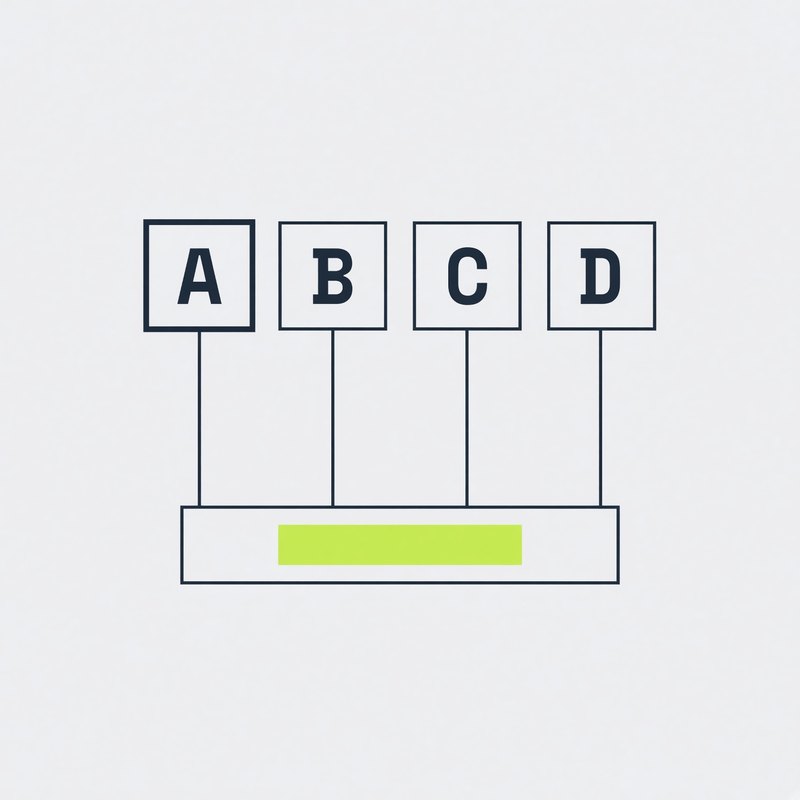
- A: paid within 30 days of issue on average. B: within 40. C: within 55. D: later than 55.
- An open dispute pauses that invoice. It counts neither way until it closes.
- A void reverses the original line. Nothing is deleted.
- A prepayment settles the day the invoice issues.
- Fewer than 12 counted invoices is a short history. A short history shows the invoice table and the label Short history instead of a letter.
Standing measures days from the invoice issue date against the terms on the invoice. It is not a finding that a payment was late under any contract or law.
Hauler standing
Built from the same record: loads hauled, on time arrival, tickets that matched the scale, and how disputes ended. It describes the company, not the driver. Where a hauler is a one truck company, the record still describes the company's jobs, not the driver as a person.
Definitions
- Verified. The ticket's number, weights and time were entered from the scale house ticket and confirmed by the billing company before it bills. RockOn does not weigh loads and does not certify scales.
- Payment record. The lines RockOn holds on a company: invoices billed to it, payments, disputes, voids and prepayments, each tied to a ticket.
- Standing. A letter, A to D, set from the payment record by the rules above.
- Short history. Fewer than 12 counted invoices. Shown as a label, not a letter.
- Performance report. One company's payment record on one page, with the invoice table behind every number.
- Trust layer. Performance reports and standing on the companies you bill. RockOn reports what the record holds. It does not vouch for any company.
- Corrections. A new line that points at the line it corrects. The first line stays visible.
- Disputes. Raised on a ticket or invoice by either company. The invoice line pauses until the dispute closes, and the outcome is written to the record.
Changes
Version 1.2 is current. Every change is dated and listed here.
What the report is
RockOn reports on companies, not people. It is built and offered as a trade reference between companies, from the same tickets and invoices both sides of a haul already see. It is not designed or offered for deciding any person's employment, housing, insurance or personal lending, and every user agrees not to use it that way. Hauler standing describes a company's completed work. Driver records stay inside the platform and are never sold. Any company can see its own standing, the records behind it, and who can view it, and can dispute any record from inside RockOn.
What is recorded, and who sees it.
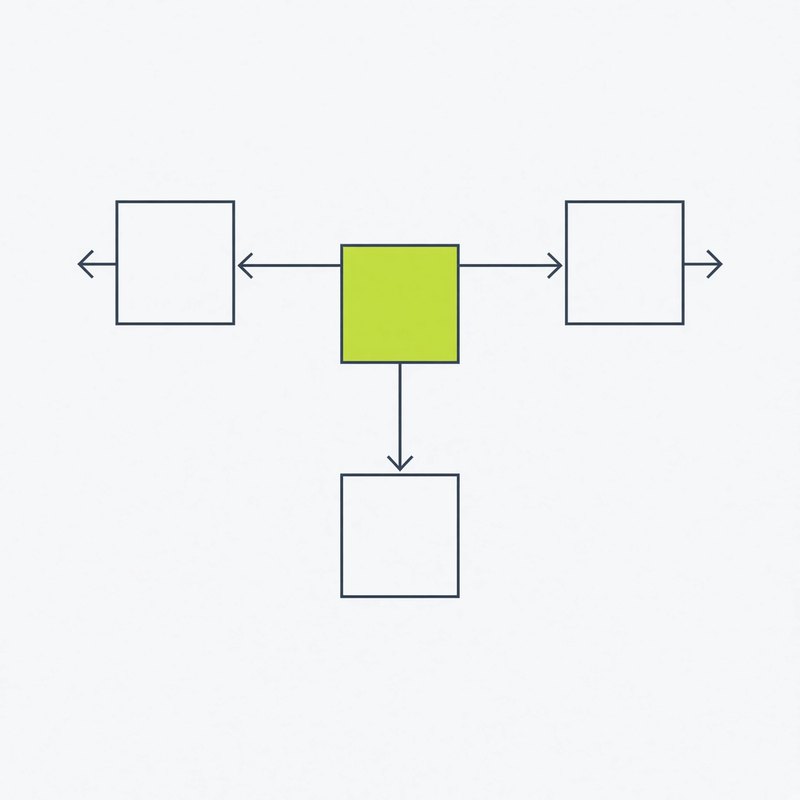
One job writes three documents and every line behind them. This page says what is written, who sees it, and what is never done.
What is recorded
| Event | Written when | What it holds |
|---|---|---|
| Ticket | Weighed and captured | Ticket number, gross, tare, net, material, time |
| Invoice | Billed from verified tickets | Issue date, terms, amount, job |
| Payment | Money received | Date paid, amount, invoice |
| Dispute | Raised on a ticket or invoice | Reason, opened, resolved, outcome |
| Void | A line is reversed | A reversing line against the original |
| Prepayment | Paid before the haul | Settled at issue |
| Loads hauled | Job closes | Loads assigned and loads hauled |
| On time arrival | Truck arrives | Arrival against the scheduled time |
| Ticket match | Ticket verified | Whether the ticket matched the scale |
Who can see it
| Record | Hauler | Producer | Broker | Customer |
|---|---|---|---|---|
| Ticket | own | own | ● | own |
| Rate | own | own | own | own |
| Standing | own | ● | ● | own |
| Driver record | own | · | ● | · |
own sees its own records in full. ● sees these fields and nothing more. · does not see it.
- For a customer: standing, invoices billed, paid on terms, average days to pay, open disputes.
- For a hauler: standing, loads assigned and hauled, on time arrival, tickets that matched the scale, how disputes ended.
- Rates, contacts and driver names are never shown. A rate is visible only to the two companies on that job.
- A party sees a standing only once it has a quote, offer or job open with that company.
What is never done
No record is ever edited
A correction is a new line. The first line stays.
No driver data is sold
Driver records stay inside the platform.
No standing is shown publicly
Only the parties extending terms or work see a company's standing.
Privacy policy
Last updated
What this site collects
Only what you type into our forms: name, company, role, email, phone if you give it, loads per month, where you run, and company names you ask us to report on. We also keep basic server logs. No advertising cookies. One analytics tag, set by this site, not by an advertiser. It does not read what you type into forms.
Why
To reply to you, to schedule a walkthrough, to price your volume, and to send a report you requested.
Who sees it
RockOn staff and the service providers that run our site and email. We do not sell it. We do not share it with other companies except as this policy describes. If you name a company for a report, that company is told a report exists on it. We do not tell it who asked unless you agree.
How long we keep it
Until you ask us to delete it, or three years after your last contact.
Your rights
Ask what we hold, or ask us to correct or delete it. Write to .
Product data
Records inside RockOn are shared among the companies on each job. You can export your records at any time, in full. Lines you were party to stay in the record for the other companies on those jobs. The data page explains who can see what.
Driver app
The driver app shares location while a driver is listed as available for work or is on an active job, and stops when the driver goes unavailable and the job closes. Dispatchers use it to see which trucks are where when covering a job. It is visible to the hauler company and to the brokers the driver is available to, is used for dispatch and the ticket record, and is never sold.
Contact
ROCKON LLC, doing business as RockOn. Conroe, Texas.
Terms of use
Last updated
Who runs this site
RockOn is operated by ROCKON LLC, doing business as RockOn.
What this site is for
Information, and requesting a walkthrough, pricing, or a report. Using the site is not a contract for the product. Customers sign a separate agreement.
How reports may be used
Reports and standing described on this site are for business decisions between companies in the trade. They are not for decisions about individuals, employment, housing, insurance or personal lending. Every user agrees not to use them that way, and not to use a hauler standing to make decisions about any individual's employment.
Accuracy
Accounting exports are planned and not yet available. Statistics are quoted with their sources.
No warranty
Website content is provided as is, without warranty. Our liability for the website is limited to the extent the law allows. Texas law governs these terms.
Trademarks
RockOn and the logo are marks of ROCKON LLC. Use requires written permission.
Contact
RockOn, Conroe, Texas.